Friday, March 15, 2019


Hey kids! Check this out . . .


A boy and his parrot at the market.
Have you ever wondered what kids do for fun on the other side of the world, 11,000 miles from where you live? Here in the highlands of Papua New Guinea, we have observed a variety of games and activities that kids do for fun once school is over for the day. Once, while walking along the Wara Kane (Kane river), we watched a group of kids race tuna fish cans along the river’s edge, herding them along with sticks. Speaking of sticks, cut a puck out of a flipflop, get some kids with sticks, and head to the basketball court for an exciting game of stick hockey! Fasten anything (organic or inorganic) that resembles wheels to a stick and you have a popular push toy that you can take with you wherever you walk. By the way, walking is the most common mode of transportation here in the highlands, and we know some kids who walk an hour and a half one way to school each day. Of course, basketball is a popular sport, with a basketball court on the station where we live. Pets are common with the kids of missionaries on station. Pets include rabbits, guinea pigs, cats, and a couple dogs. Prior to returning to the states on home assignment, Josiah hosted a weekly “bug club”.
Below are pictures of other games and activities that are common to this area. Compare them with what you do in your free time.
A game of marbles is always popular.

An intense game of 4 way chess.

Kids learn to play chess over their winter holiday.

Naomi and Anna demonstrate their tree
climbing skills.

Not many playgrounds boast having an airplane to play on.

Sometimes play takes a backseat
 to chores.

PNG is a bug collector's paradise.

Wheels on a long stick provide entertainment
 on those long walks.
Ethan shows off his pet guinea pig.

A bucket of chalk unleashes creativity.
Daniel's prize possession - a slingshot
made by a village friend.

Cooling off in the canal is great fun
on a hot day.

Catching polliwogs in the baret (ditch) at recess time.

Friday, March 8, 2019


Gardening in PNG

A patchwork of gardens in
the highlands
Flying in to the highlands of Papua New Guinea, one quickly notices the patchwork of gardens that blanket both flatlands and mountainsides. In a land with a perpetual growing season complemented by over 150 inches of annual rainfall, gardens are the lifeline for the people of PNG. Staple crops include kaukau (sweet potato), taro, corn, beans, peppers, tapiok (from which tapioca is made although here it is only used as a root), peanuts, greens, sugar cane, cabbage, peppers, onions, bananas, and pineapples. Garden plots consist of raised beds separated by barets (ditches) for water drainage. Men dig the barets, adding soil to the raised beds. Women plant, rausim the weeds, and harvest. The rich volcanic soil is very porous, and water soaks through it quickly, running off into the barets. Crops are rotated in the beds, with multiple crops sometimes grown in the same bed. Popo (papaya) and orange trees are abundant, and many people have coffee trees, picking the cherries twice a year.
When we arrived at our home here in Kudjip, we discovered a large garden in our backyard, overgrown and in need of work. Seven of the raised beds contained pineapple plants in all stages of growth. Without a rototiller or even a hoe, I was clueless as to where to begin to revive the garden. We enlisted the help of our friend Topi who would work in our garden in the afternoon after finishing his day job at the station mowing lawns. He cleaned up the beds and dug new barets using the only two garden tools used by all PNGer’s – a spade, and a bush knife.
No hillside is too steep
for a garden
I took over once Topi finished the barets and beds, and the next step was to find seed to plant. Dr. Bill, an avid gardener, provided us with starts of pea plants, lettuce, cherry tomatoes, and cilantro. We also began collecting and drying seed from produce we purchased at the market. We had mixed results with this depending on the plants. I planted a pepper seed and marked it with a dry stick. The pepper seed never germinated, but the stick sprouted leaves! A national friend gave us beans, and we had pole bean plants that were 8 – 10’ tall and produced an abundance of beans. Later, we found garden seed packets at a store on our monthly trip to Mt. Hagen. Small plants are always susceptible to being eaten by various insects, but once they grow taller, it is not an issue. Thankfully, there are no gophers, moles, rabbits, or deer to compete with here in PNG.
Pineapple garden in our backyard in Kudjip
Topi showed us how to plant new pineapples to replenish the older plants. Tops are broken from ripe pineapples, leaves are peeled off exposing the root initials that produce roots once the pineapple top is planted in the ground. A pineapple plant takes about 18 months to produce a ripe pineapple.
Topi prepares garden beds
and barets using a spade
Elaborate flower arrangements decorate
the front of a bush church
The people of Papua New Guinea love their flowers, maintaining beautiful flower beds around their homes. Our friend, Aki, spends five hours each Saturday afternoon decorating the front platform of her church with flowers. We especially enjoy the bountiful colors of the dahlias, and they are a lot easier to grow and maintain here than our previous attempts in both Oregon and Idaho!
Flowers abound in the
highlands
Beds ready for planting
Root intials at the base of
a pineapple top, produce a new
plant when placed in the
volcanic soil.
Coffee cherries fill a truck
bed in Mt. Hagen
My first ever New Zealand Blue
pumpkin
Topi plants peanuts among
the pineapple starts
Sugar cane leaves are wrapped
around bamboo poles to
support the stalks


Saturday, February 2, 2019


Pastor Apa’s Story

Shortly after arriving at Kudjip station last August, we met Pastor Apa who was working on the elementary school renovation at the time. His warm welcome and fluent English made for an instant friendship. Recently, we had the privilege to hear his story over lunch.

Born with deformed hands, Apa grew up in a family with four older sisters down the road near Minj. His parents were poor and could not afford to pay the fees to send him to school. Instead, he stayed at home where his parents taught him to work the “old ways of making life”. Later as a child, his older sister invited him to Madang on the north coast of PNG to go to school. Again, because of lack of money to pay school fees, he was in and out of school, and finally gave up after the 8th grade.
He returned home where he became wrapped up with the community boys. He became a “bully boy” – with bad thoughts, and bad ideas. He began drinking and smoking marijuana, and even his parents became afraid of him. Later, he married and his wife gave birth to their first born son whom they named Bon. In order to provide for his family, Apa and his fellow raskols (criminals) would take their guns down to the road, stop vehicles, and rob passengers. His uncle came to him three times and told him he must stop or the family would call the police and have him arrested.
Apa came to the realization that he needed to start over, and he told his wife they were leaving the area. Apa moved his family up into the mountains, where he built a home, and planted a garden. His wife gave birth to two more sons, Bentolio and Bobby. At the age of 3, Bentolio became very sick, so Apa carried him down the mountain back to Minj for medical care. It was the rainy season, and heavy rains fell day and night. Finally, Apa reached the medical clinic. While Bentolio was recovering, Apa visited his mama, and began gambling with his old friends to pass the time. Finally, the day came when Bentolio was released. Apa planned to stay with his mama that night, but Bentolio was anxious to return home to see his mama. As darkness fell, Apa began the walk back up into the mountains. Without a light, Apa walked on in the darkness, the rains pouring down, little Bentolio asleep on his shoulders. No one else was on the road that night, and Apa had no way of knowing that ahead of him, a landslide had taken out the bridge across the river. Feeling along the road with his feet, Apa began to pray for the first time in his life. Finally in the blackness, he reached the river.  
Stepping onto the bridge that was no longer there, Apa and Bentolio plunged over the edge into the deep water of the flooding river. For 20 minutes Apa was pulled downstream, struggling to come up for air. During that time, he clearly heard a voice saying to him three times, “Apa you must go to lotu (church).” He found himself washed up on the edge of the flooding river, soaking wet and sweating profusely, calling out to Bentolio, who never answered. Helpless in the darkness, Apa was completely broken in body and in spirit.
In the tradition of the people of the highlands, neighbors came to a haus krai (place of mourning) at Apa’s home, bringing food, and wailing with the family over the loss of Bentolio. Apa prayed that he would find his Bentolio so he could give him a proper burial. God answered that prayer. Another landslide occurred damming up the river, and Bentolio’s body was found floating in a pool.
Shortly after that, Apa’s wife left him and his two boy’s never to return. With no work other than his garden, Apa struggled to provide for his sons Bon and one year old Bobby. His only other family member left was his mother. Soon Apa received word that the community boys he used to run with became jealous of his family’s land. They murdered his mother and took over the land.
Apa had lost his son, he had lost his wife, he had lost his mother. He came to the point where he would say, “I am yours Lord, I am broken, I will constantly be worshipping you the rest of my life.”
Apa found a job as a security guard at the Kudjip hospital station. He learned to read and speak English by picking books out of the trash that people threw away. He married Betty, who had two daughters of her own. He attended Melanesia Nazarene Bible College for three years, and received a certificate in pastoral studies.
Pastor Apa started a preaching point on land at his wife’s place. It became the Kawil Church of the Nazarene where he is currently the pastor. God has given him a heart to love all children. In addition to pastoring the Kawil church, Pastor Apa works on special construction projects around the station. He is very appreciative of the construction skills he has learned on station from project leaders Randy and Jordan. Pastor Apa and Betty (who is also a pastor) have started a home for disabled people at their church.
“I have felt the pain in my life, and I see the pain in others. I am confident in facing problems with Jesus. I want people to see me as an example of not giving up. You need to forgive, forget, and keep moving forward with Jesus.”  - Pastor Apa

Sunday, January 6, 2019


Boomerang Wood Shop

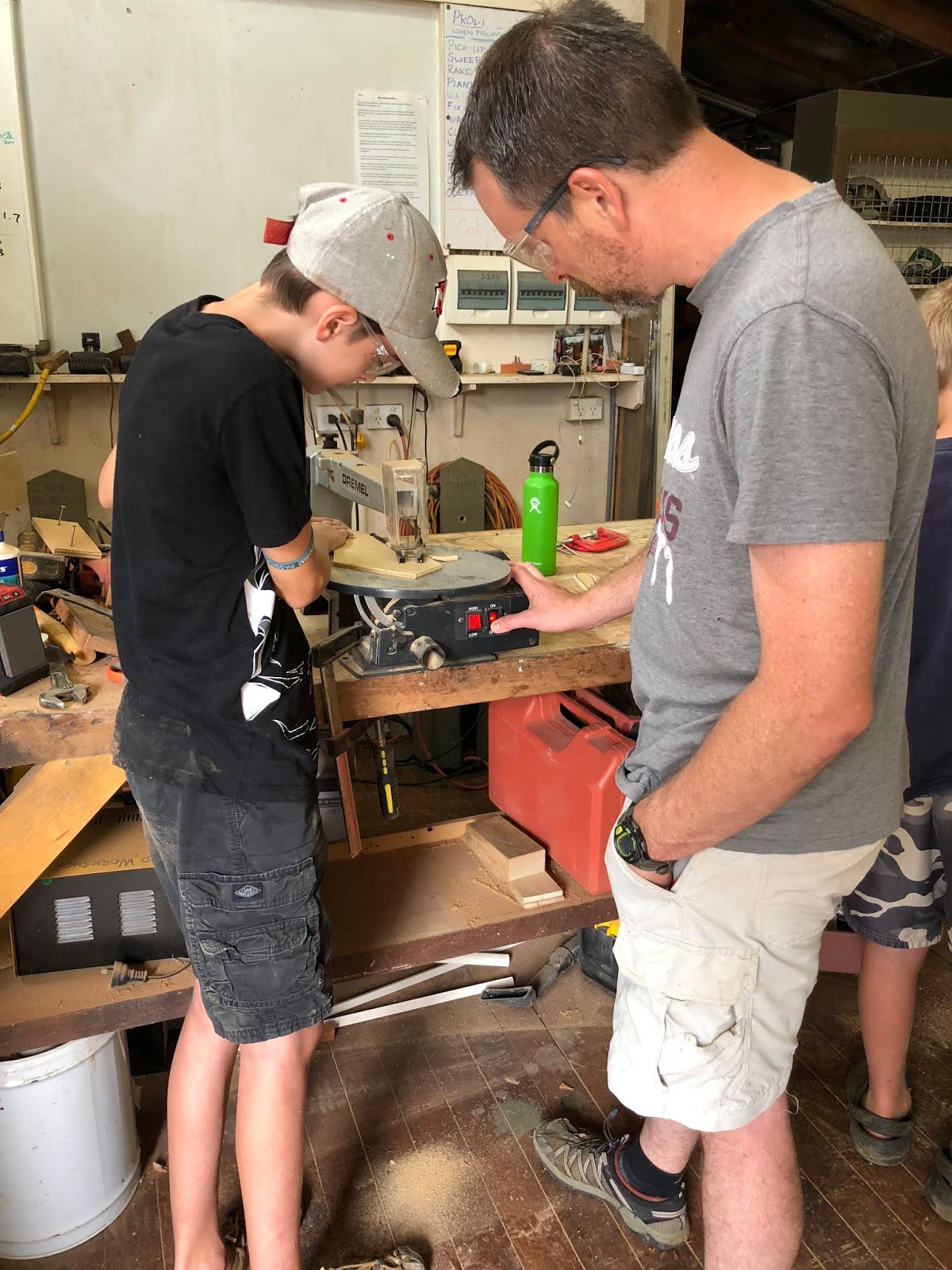
Saturday morning I had the privilege of teaching wood shop again (after a 20 year break) to some of our MK’s and their dads. Working at our maintenance shop here on station, we learned how to safely use the equipment and the processes for turning a piece of ¼” plywood into a fully functional boomerang. Once the boomerangs were finished, we walked to the large grassy field outside of the gate. A great time was enjoyed by all as we successfully tested our homemade boomerangs. Additional fun included searching for the boomerangs in the tall grass, and watching Daniel climb the giant bamboo tree to retrieve one caught in the top branches!


The boomerang magnet


Saturday, December 29, 2018


Kudjip Christmas in Review

Crossing over the Highlands highway, we make our way over the muddy, garbage strewn ditch, and enter the Kudjip rot bung (market). This Christmas season, it is a reminder of when God came into the world in the person of Jesus Christ. “The Word became flesh and lived for a while among us.” (John 1:14) I like how The Message translates this as “God moved into our neighborhood”. The hollow stares begin to warm as we call out moning olgeta (good morning all). We move among the vendors with their kaukau (sweet potatoes), corn, peppers, greens, and pik (pig) cuts of meat spread out on tarps. The smiling faces, and the outstretched hands that welcome us, are a constant reminder that regardless of the color of our skin, our living conditions, our backgrounds, or our current place in life, we are no different. We are all in need of a personal relationship with the one who calls us out of the darkness into his marvelous light. May God through his son Jesus, move into your neighborhood this Christmas season and each day of your life.
It has been a full week of Christmas here at Kudjip. We finished school last Friday looking forward to a week off for vacation. Frosting cookies and making shrinky-dinks was a big hit with our students the last day. Friday night our students hosted their Specials Showcase where they shared what they have learned this semester in their music, art, maps, and inventors class specials. Saturday we were invited to a mumu (food cooked in a pit using heated stones) by a local tribe. The purpose of this tribal gathering was to honor mothers, wives, and sisters. This is one tribe that is trying to make a change in a culture where domestic violence against women is very prevalent. Sunday morning found us navigating muddy roads up into the mountains with our friends and neighbors, Matt, Tammy, and their two children Elana and MJ; and Daniel, who took a break from his residency program in Colorado to come and work in the hospital for a month. Our destination was the bush church of Sengen Church of the Nazarene. Monday, Brenda enjoyed teaching her friend Rita how to make a cake. With only a fire to cook over at her own home, Rita was very amamas (happy) to make a cake to share with her family in celebrating Jesus’ birthday. On Christmas Eve we joined the other families for a time of caroling and passing out gifts in the hospital wards. Early Christmas morning, we served homemade cinnamon rolls to the 45 nursing students who are staying here over break for their clinicals at the hospital. That night, we enjoyed a delicious, lasagna dinner at Ben and Katherine Radcliffe’s home, along with other friends.

Wishing friends and family a Happy New Year!


David & Brenda

Naomi greets visitors to our
school Specials Showcase
Josiah and Amber Joy are ready for
questions about contour maps and inventions


Elana shares what she learned
about texture in art class
Entering the Kudjip market


A few of the 38 pigs served at the mumu


Walking the last mile to the Sengen church
Christmas Sunday at Sangen church


Waiting for church to begin
Lunch after church
Enjoying some good kaikai (food) 
Guests are presented with handmade bilums


Rita prepares the icing for her cake
Caroling in the hospital wards
Each child patient receives a stuffed animal and a blanket
     
         
A quiet Christmas Eve shared with our
friend Ame, the high school teacher
Christmas dinner at the Radcliffe's